The quick answer
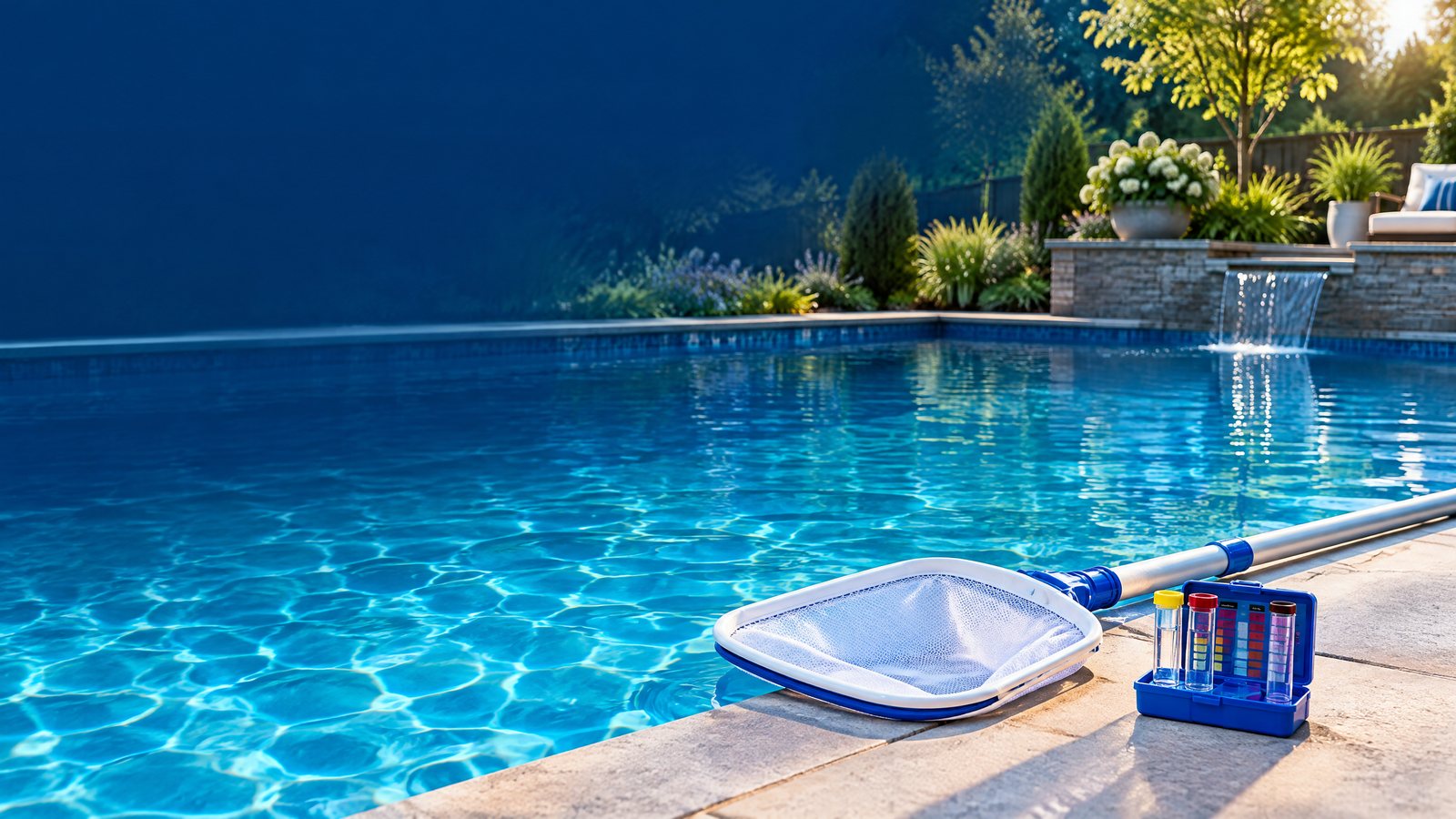
Good pool maintenance is a consistent routine: keep debris under control, check water condition regularly, pay attention to circulation and equipment, and get help early when something changes. The exact schedule depends on how the pool is used, the weather, the equipment, and the pool’s water condition.
What does weekly pool maintenance include?
Weekly care is the foundation of a well-kept pool. It is not about chasing perfection with a long list of products. It is about noticing small changes before they become a harder-to-understand problem.
- Skim and clear debris: leaves and small debris can collect quickly after wind or rain, especially around skimmers and baskets.
- Brush and vacuum as needed: keeping surfaces clear helps you see what is happening in the pool and prevents buildup from being ignored.
- Test the water: use an appropriate testing method and make adjustments only when you understand what the result calls for.
- Look at circulation: pay attention to return flow, filter pressure or indicators, and anything that seems different from normal operation.
- Check the equipment area: notice leaks, unusual noises, loose fittings, or a pump that is not behaving the way it usually does.
Those habits align with the simple Panda Pool Care Card we leave with customers: test water, watch circulation, keep baskets clear, and brush surfaces on a regular rhythm.
How often should you maintain a pool?
Pool care is ongoing, but the details depend on the pool. A high-use pool in warm weather may need more frequent attention than a covered pool with light use. Rain, nearby trees, bather load, water temperature, and equipment condition also change what a pool needs from week to week.
Rather than relying on a generic fixed schedule, look for consistency. Create a short routine you can actually maintain, and keep a simple note of anything that changes. If water clarity, circulation, or equipment behavior shifts quickly, that is a better reason to investigate than a calendar reminder alone.
Water care: keep it measured, not guessed
Water treatment is part of maintenance, but it should be handled carefully. Test results, product labels, pool volume, and the full water picture matter. Do not mix chemicals, do not add products casually to compensate for an unknown issue, and follow manufacturer instructions and safety guidance.
Safety note: If you are not sure what a test result means, what product is appropriate, or how equipment should be running, pause and ask a pool professional. A measured response is safer than trying several products at once.
What should you watch for between service visits?
Small observations are useful. A pool owner is often the first person to notice that a pump sounds different, water is not moving as expected, a cover is damaged, or water clarity has changed after a storm. You do not need to diagnose the cause; describing what you see and when it began can help a professional assess it faster.
- Water that becomes cloudy, changes color, or develops persistent debris.
- New or louder equipment noise, loss of visible circulation, or a recurring error indicator.
- Water level changes that seem unusual for weather and normal use.
- A damaged cover, loose hardware, or an access or safety concern around the pool.
How maintenance changes at the end of the season
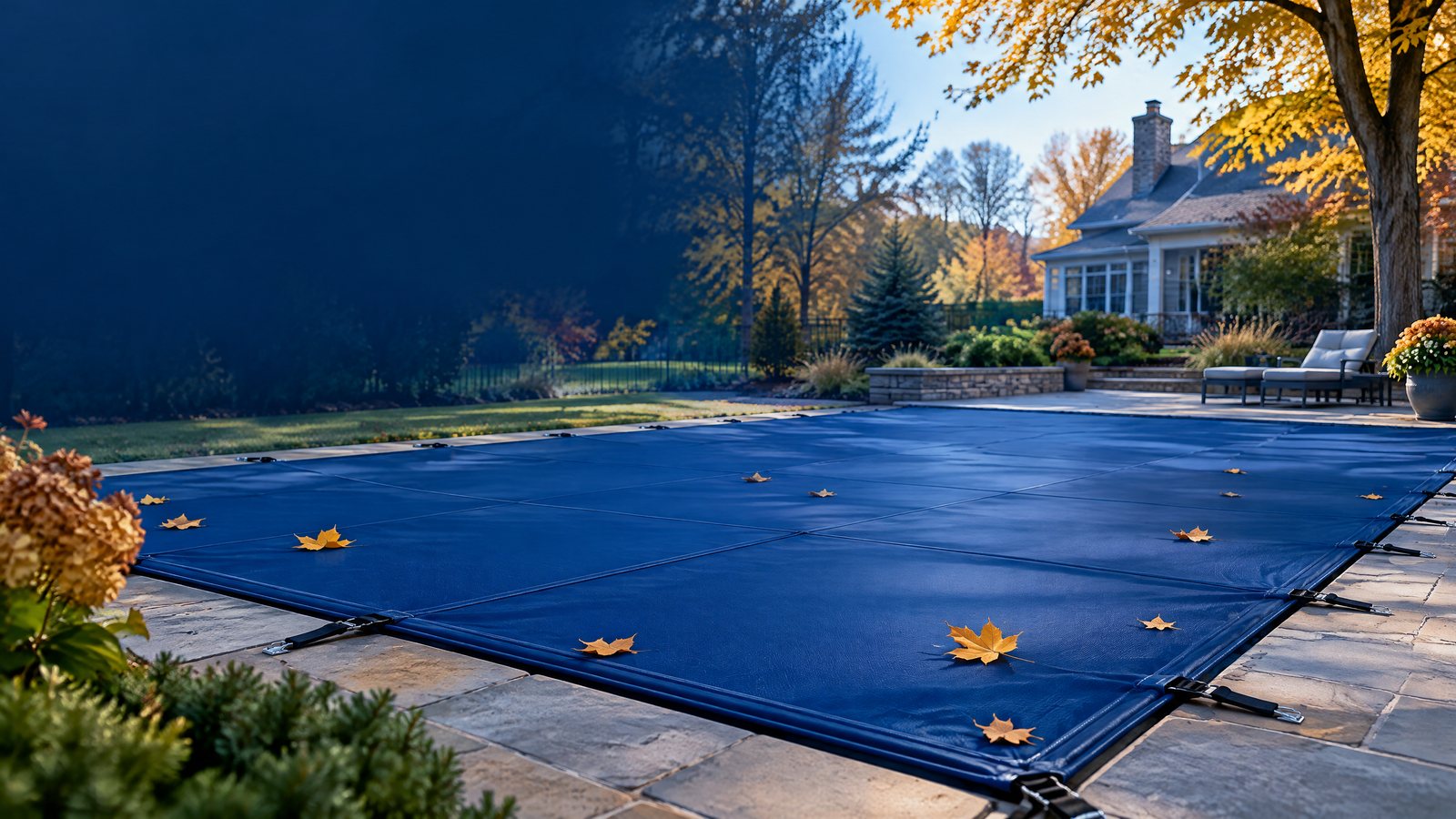
When the swimming season winds down, routine maintenance transitions into closing preparation. The goal is not simply to add one chemical or pull a cover tight. Water condition, equipment, cover selection, and the needs of the specific pool all deserve attention.
Our pool closing guide for New Jersey explains the seasonal planning side in more detail, including when many homeowners book and what to prepare before an appointment.
When to bring in a pool professional
Professional service is useful when you want dependable weekly care, when the water or equipment is acting outside its normal pattern, or when you simply want a clear service plan for your own pool. Panda Pool Services offers weekly cleaning, water testing and chemical balancing, equipment care, and seasonal opening and closing support for New Jersey residential pools.
Every plan starts with a free visit so the team can see the pool and provide a straightforward quote. No two pools are the same, and the best recommendation begins with the actual pool in front of us.
Quick answers
Pool maintenance FAQ
Concise answers to questions homeowners ask while trying to keep a residential pool clear, comfortable, and easier to manage.
How often should I maintain my pool?
Pool care is ongoing. Check the visible condition of the water and equipment regularly, remove debris as needed, and follow a routine suited to the pool’s use, weather, system, and water condition.
What does weekly pool maintenance include?
It often includes skimming, brushing or vacuuming as needed, emptying baskets, testing water, making careful adjustments only as appropriate, and checking the visible operation of equipment.
What are signs my pool needs professional service?
Ask for help when water condition changes quickly, equipment is noisy or behaving unusually, circulation is weak, a leak is suspected, or you are not sure how to respond safely.
How does maintenance change before winter?
Seasonal care becomes a pool closing plan that considers the water, equipment, cover, and local weather. Read the closing guide or ask for an on-site recommendation for your pool.